
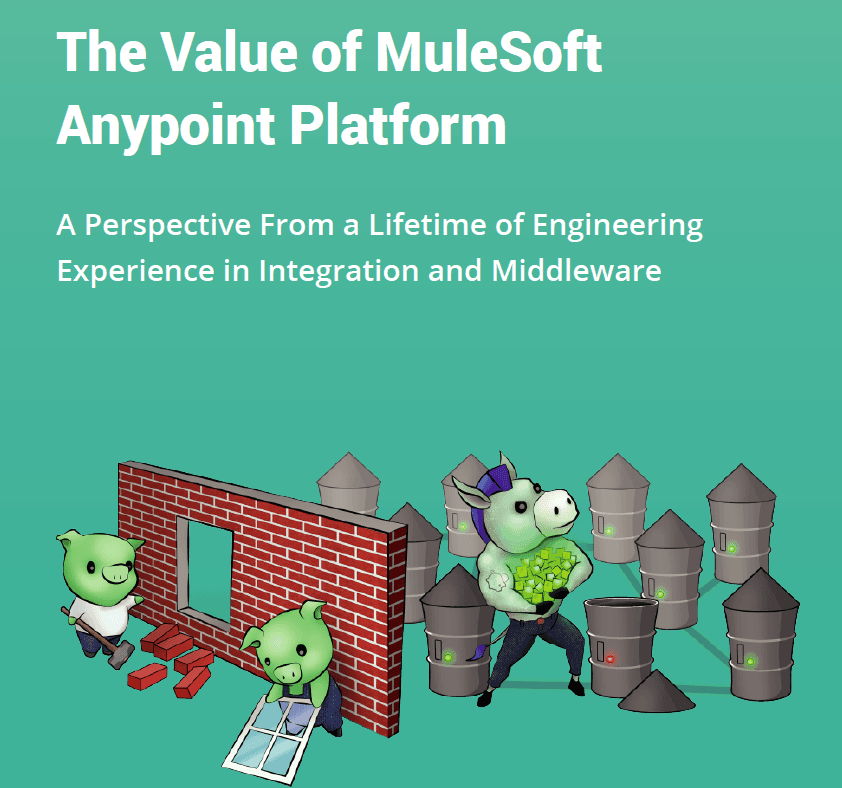
A few years ago we published a white paper called The Value of MuleSoft Anypoint Platform, built around a question our engineering team had heard for a lifetime in integration: “Why can’t I just build this myself?”
Our answer then was: you can — if you have an R&D-caliber engineering team and you’re prepared to invest far more than the license cost building a platform that won’t be as robust, won’t be supported, and won’t improve in yearly releases while you’re busy running your business.
AI has reopened that question at nearly every table we sit at. And the instinct is more understandable now than it’s ever been. A capable team with modern AI tooling can stand up a working integration in an afternoon. Code that used to take a sprint takes a prompt. Build has never looked cheaper.
But here’s what we keep coming back to: the white paper’s argument was never about how long the code takes to write. It was about everything else.
When we inventoried what “build your own platform” actually means, the list barely mentioned business logic. It was identity management and access control. API versioning and deployment promotion. Monitoring, log aggregation, traceability. Connectors that someone has to update every time a vendor changes their API. Policy management, SLAs, automated recovery. MuleSoft calls this the donkey work, and it’s why companies in their own benchmark research were spending 71% of integration budgets keeping the lights on instead of shipping anything new.
AI compresses the first 20% — writing the code. It doesn’t compress the ownership tail. If anything, it lengthens it. The fastest way to accumulate a system nobody fully understands is to generate large amounts of code that nobody on your team wrote by hand. Eighteen months later, the person who prompted it is gone, the AI that wrote it has been deprecated twice, and you own a bespoke platform with no vendor, no release cycle, no support line, and no hiring pool of certified people who already know it. (We made this same case about AI-generated integration specifically in Why ‘Just Vibe Code It’ Is the Most Expensive Move in Integration.)
That’s the trap, and it’s the same trap the paper described wearing a better costume: confusing a project (get these two systems talking) with a product (own an integration platform for the life of your business). Every concept in the original paper — reuse over one-offs, guardrails over heroics, total cost of ownership over initial build cost, the “big ball of mud” that gets slower as it grows — holds up completely. AI didn’t invalidate the math. It just moved the line item the math hides behind.
Here’s what is genuinely new: AI raises the value of a governed platform instead of lowering it. Everything we’re building with AI agents depends on the systems underneath being accessible in a clean, governed, reusable way. An application network of well-defined APIs isn’t legacy plumbing in the AI era — it’s the substrate agents run on. The companies getting real production value out of AI right now are overwhelmingly the ones whose data and business logic were already unlocked behind well-managed interfaces. The build-vs-buy decision isn’t just about integration anymore; it’s about whether your AI foundation is something a vendor invests in every year or something you maintain alone.
So our point of view, updated for the AI age: let AI change how fast you deliver — not what you have to own. That’s how we run our own delivery: AI-accelerated teams building on a governed platform, which gets you the speed everyone’s chasing without quietly signing up to be a platform company on the side. Speed of build, economics of buy.
If you’re weighing this decision right now, the original white paper is still the most complete version of the argument — the cost comparisons, the side-by-side case study of two companies who chose differently, and the full inventory of what “we’ll just build it” actually commits you to. Read it here.
And if you’d rather pressure-test your specific situation than read a white paper, that’s a conversation we have every week. Get in touch.