
What an RFP builder gets right, where it breaks, and how to judge whether the “best” one actually fits your team.
An AI RFP builder is software that reads an incoming RFP, extracts the structured data — deadlines, contacts, requirements — and drafts response content pulled from your team’s past proposals. It shortcuts the blank-page problem in proposal work; it does not replace the judgment that wins the deal. If you’re evaluating an RFP builder for the first time, that distinction is the whole ballgame.
What a good RFP builder actually does
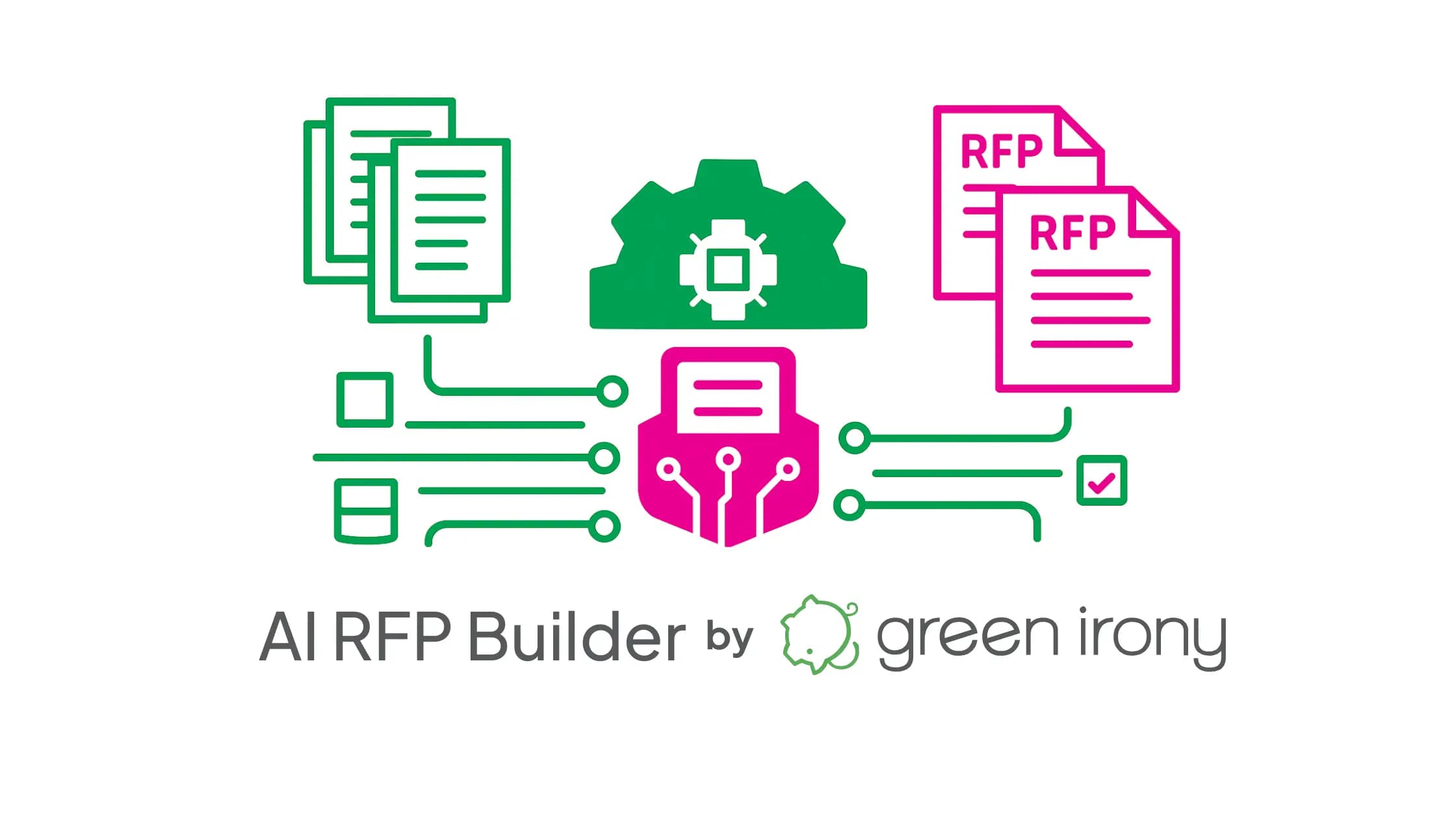
Strip the marketing language and a real RFP builder does three jobs. First, it ingests the document and extracts the fields your team currently copies by hand — company details, scope, deadlines, compliance requirements — and pushes them into your CRM as a live opportunity. Second, it scores the opportunity against your own win/loss history so your team spends time on RFPs you can actually win, not every inbound document that lands in the inbox. Third, it drafts response language from your past proposals, so a proposal writer edits a first pass instead of starting from a blank template.
Done well, an RFP builder cuts the time between “we got an RFP” and “a draft is in front of a reviewer” from days to hours. That’s the entire value proposition. It is not magic and it is not autonomous.
Where AI RFP tools fail
Every AI RFP builder inherits the quality of what you feed it. If your proposal library is three years stale, or your win/loss data was never tagged consistently, the tool will confidently produce a wrong answer instead of a good one. That is the single most common failure mode, and it has nothing to do with the model underneath.
The second failure mode is compliance blindness on edge cases. An RFP builder can match a clause to a past answer, but it doesn’t know your legal team changed a warranty term last quarter unless someone updated the source. On regulated or multi-hundred-page RFPs, a human still has to walk the compliance matrix line by line. Treat the draft as a strong first pass, not a submission.
Third: teams that buy an RFP builder expecting it to fix a broken proposal process usually end up with a faster version of the same broken process. The tool exposes gaps — inconsistent messaging, no single source of truth for pricing, unclear ownership — it doesn’t close them.
What it needs from you to be useful
Before you evaluate vendors, get honest about three inputs:
- A clean proposal library. Past RFP responses tagged by topic, industry, and outcome. Garbage in, garbage out is not a cliché here; it’s the failure mode above.
- Structured win/loss data. If you can’t say why you lost the last ten RFPs, the prioritization engine has nothing to score against.
- A system of record that stays the system of record. An RFP builder should write opportunity data into your CRM, not create a shadow copy of it. If you run Salesforce, that integration has to be real, not a CSV export. We build that connective layer as part of Salesforce implementation work — Salesforce stays the record of truth; the RFP builder just feeds it faster.
How to judge the best AI RFP software
“Best” depends on what breaks first in your process, but four criteria separate a serious tool from a demo: how it grounds drafts in your actual source content instead of generic language; how easily a human can edit and override every generated section; how deep the CRM integration actually goes versus a bolt-on import; and how it handles sensitive proposal data — where it’s stored, who can see it, whether it trains on your content. Ask every vendor to answer those four in writing before a pilot, not after.
Build vs. buy
Not every team needs a packaged RFP builder. If your proposal volume is low but your broader SaaS stack is already sprawling, the higher-leverage move is fixing the systems feeding the RFP process before adding another tool on top. A SaaS Audit will tell you whether an RFP builder solves your actual bottleneck or just adds a new subscription to a stack that’s already fragmented. For teams already standardizing their CRM data model around AI-native workflows, an RFP builder is a natural extension of the same architecture we build into a Claude-native CRM.
FAQ
How long does it take to stand up an AI RFP builder?
Weeks, not months, if your proposal library and CRM data are already clean. Most of the timeline goes to organizing source content, not configuring the tool itself.
Does an RFP builder replace a proposal team?
No. It removes the blank-page work and the manual data entry. Strategy, pricing decisions, and final review still need a person who owns the win.
Can an RFP builder work alongside Salesforce instead of around it?
Yes, and it should. The builder should write opportunities and RFP metadata directly into Salesforce so it stays your single source of truth, not a side system your team has to reconcile.
What’s the biggest mistake teams make when adopting one?
Buying the tool before auditing the proposal content it will draw from. A fast draft built on stale answers is still a stale answer, just faster.